
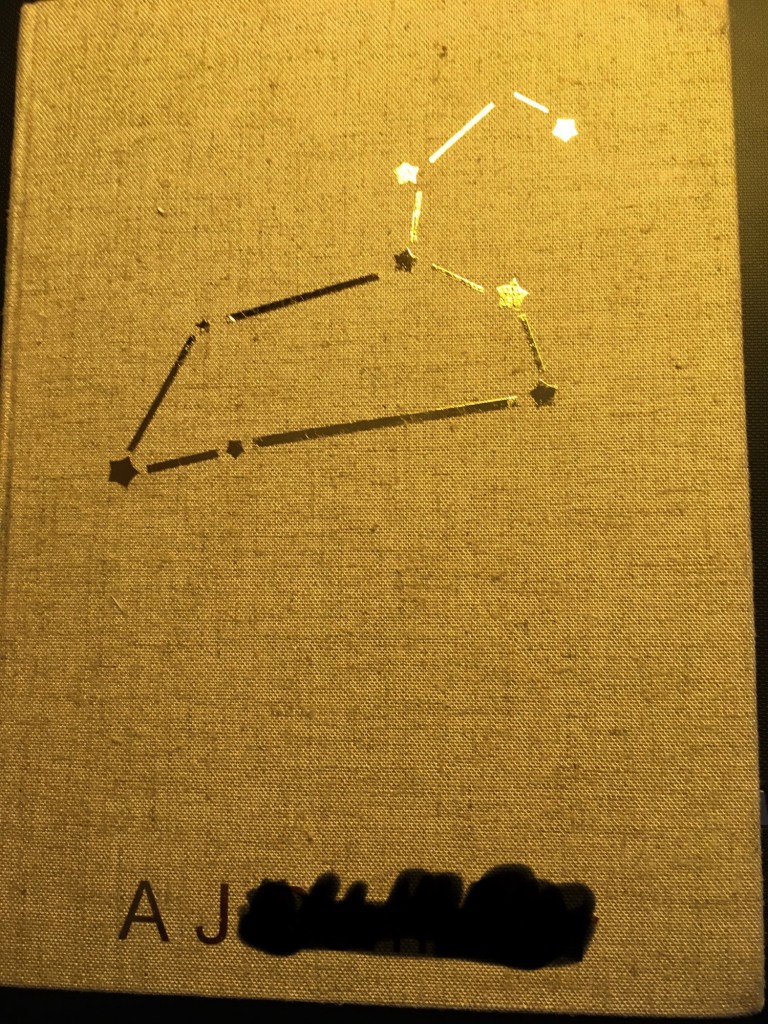
I’m ready to complete the book I’ve been working on. We met today and I turned over the final draft for a read-through before I print and bind it. As I’ve said before, this is a one-off commemorative volume. We’ve settled on the binding and the decoration for the cover. I have a nice batik print as the background for a silver foil starry sky and fireflies to be added.
I’ll do the final printing next week and finish the assembly and binding the week after. I’m not charging for this. If I am offered something, I might accept it, but I can’t price pain. Bookbinding and making are things I like to do. I charge a nominal sum for book repairs when I do those.
Most of the books I make are junk journals. That’s a fairly new type of book making – new as in the last ten years or so. It’s become a hobby or a business for lots of crafters. The difference between the forms of bookbinding is that junk journals are easier to make and the supplies for junk journals are found in your daily mail, your sewing box, your scrapbooking supplies, and around the house.
No special equipment is needed except a box cutter or scissors, a metal ruler, a cutting mat, assorted papers, and fabric scraps, glue, tape, a needle, and heavy thread or embroidery floss. For decorations, old greeting cards, magazine pages, and scraps of paper will suffice. Crayons, paints, colored pencils, ink pads and stamps are nice, but you don’t need to go overboard.
Most supplies can be gotten in the crafts section at the dollar store. For instance, Dollar Tree sells pokey tools, rulers, cutting mats, glue, inks, stencils, and other art supplies for $1.25 each. I was able to outfit my beginning bookbinding students with tools for a bit over $10 each. The costs came from their fees.
For junk journals, I use any old cardboard and the book cloth is made with iron-on interfacing. The stitching of the signatures is done directly on the spine and rarely covered up. Embellishments and pockets are added to hold snippets of papers and journaling cards. They are books to be written and drawn in. If something rips, a colorful tape will bind it together and become part of the decorations.
The type of binding I doing on this slim book involves more complicated assembly. I have the last of my archival quality book board to use. I will use the last of my acid-free tissue to line the fabric that will cover the boards. My industrial paper cutter will be used to assure clean edges. Acid free glue will hold cloth and boards together. Linen thread will bind the signatures. This will be a volume to be handed down to generations.
Once it is done, I will post a picture. Or maybe I should post pictures that show each step of the process.
 Sillytoes Crafts